* 主体类型
* 企业名称
* 信用代码
* 所在行业
* 企业规模
* 所在职位
* 姓名
* 所在行业
* 学历
* 工作性质
请先选择行业
您还可以选择以下福利:
行业福利,领完即止!

下载app免费领取会员






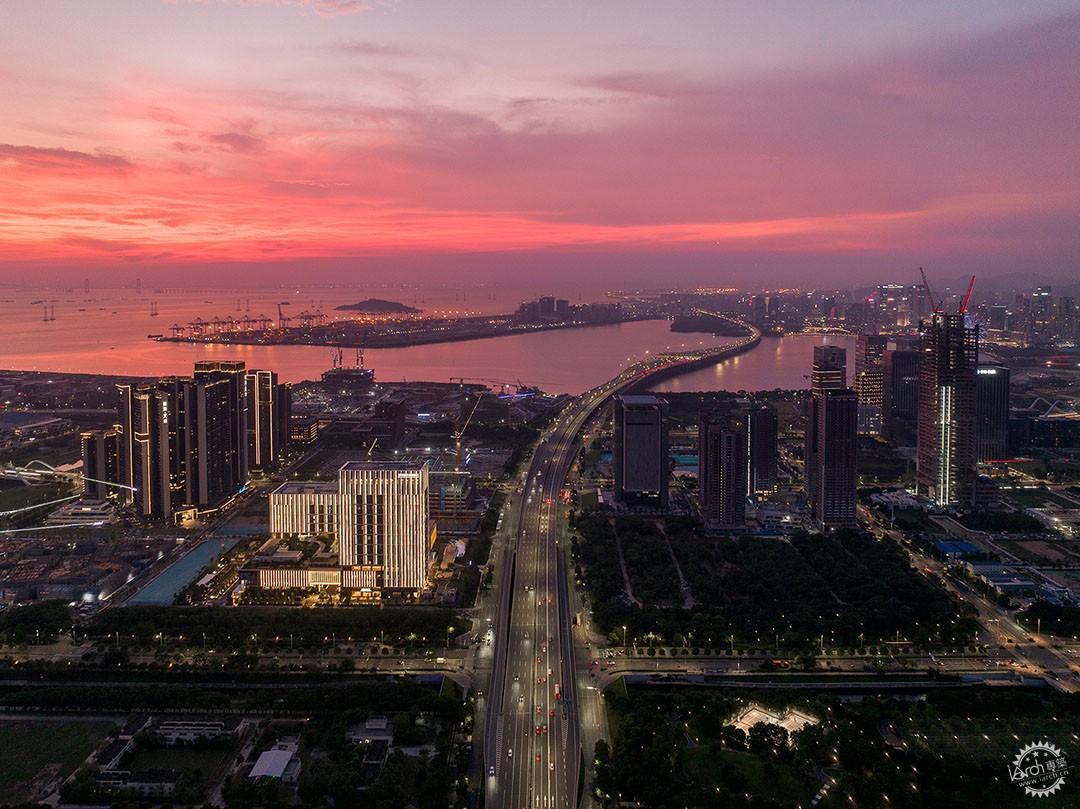
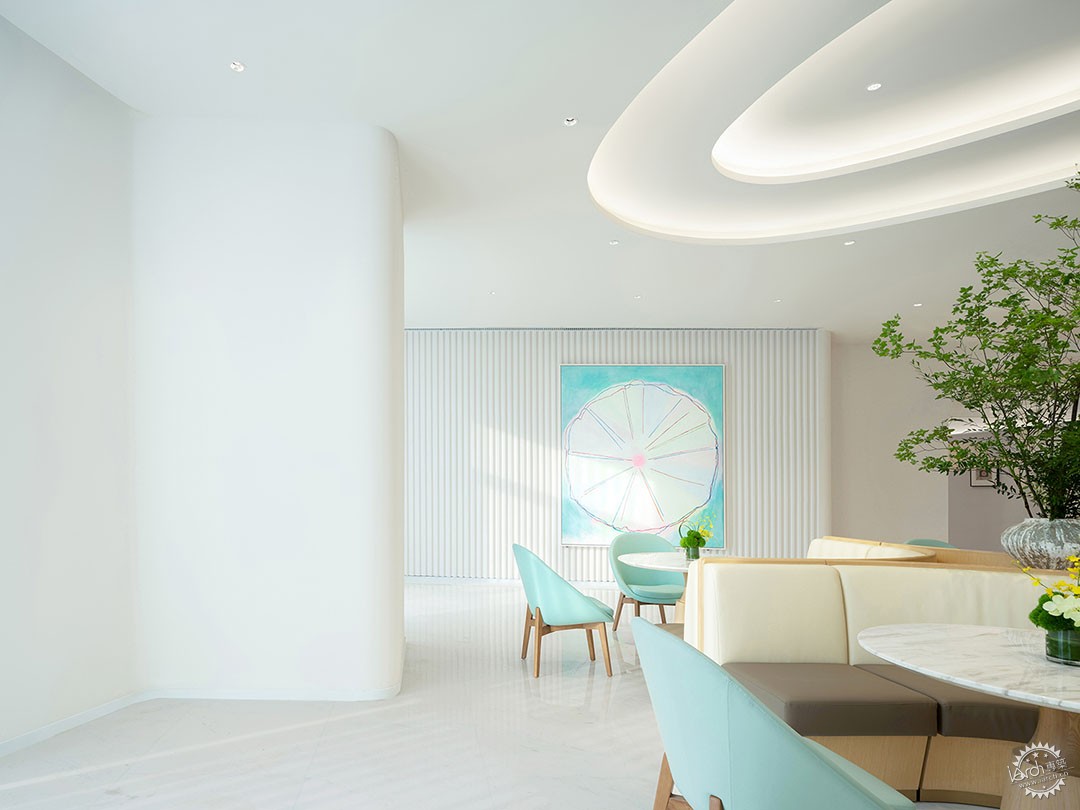
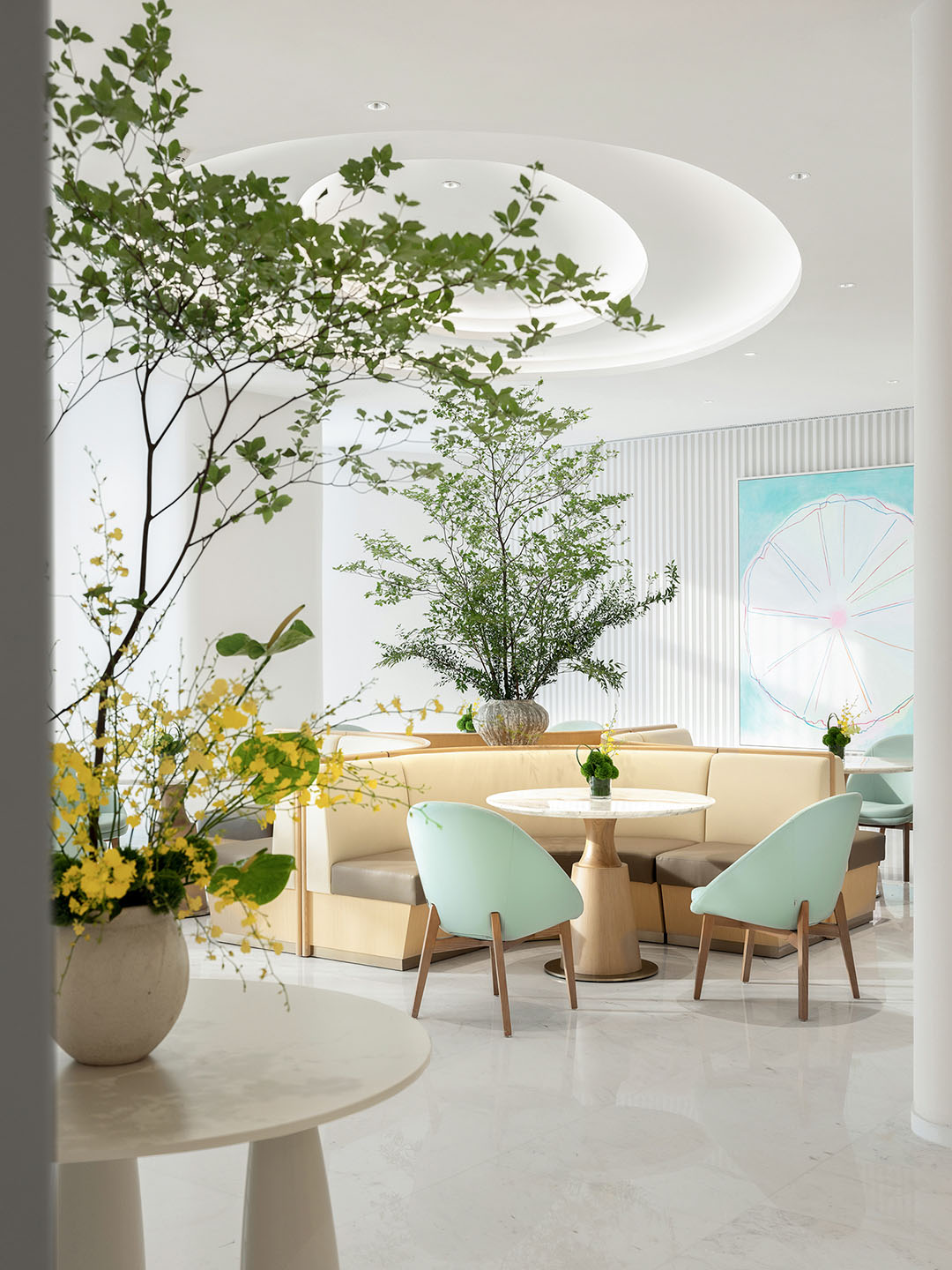
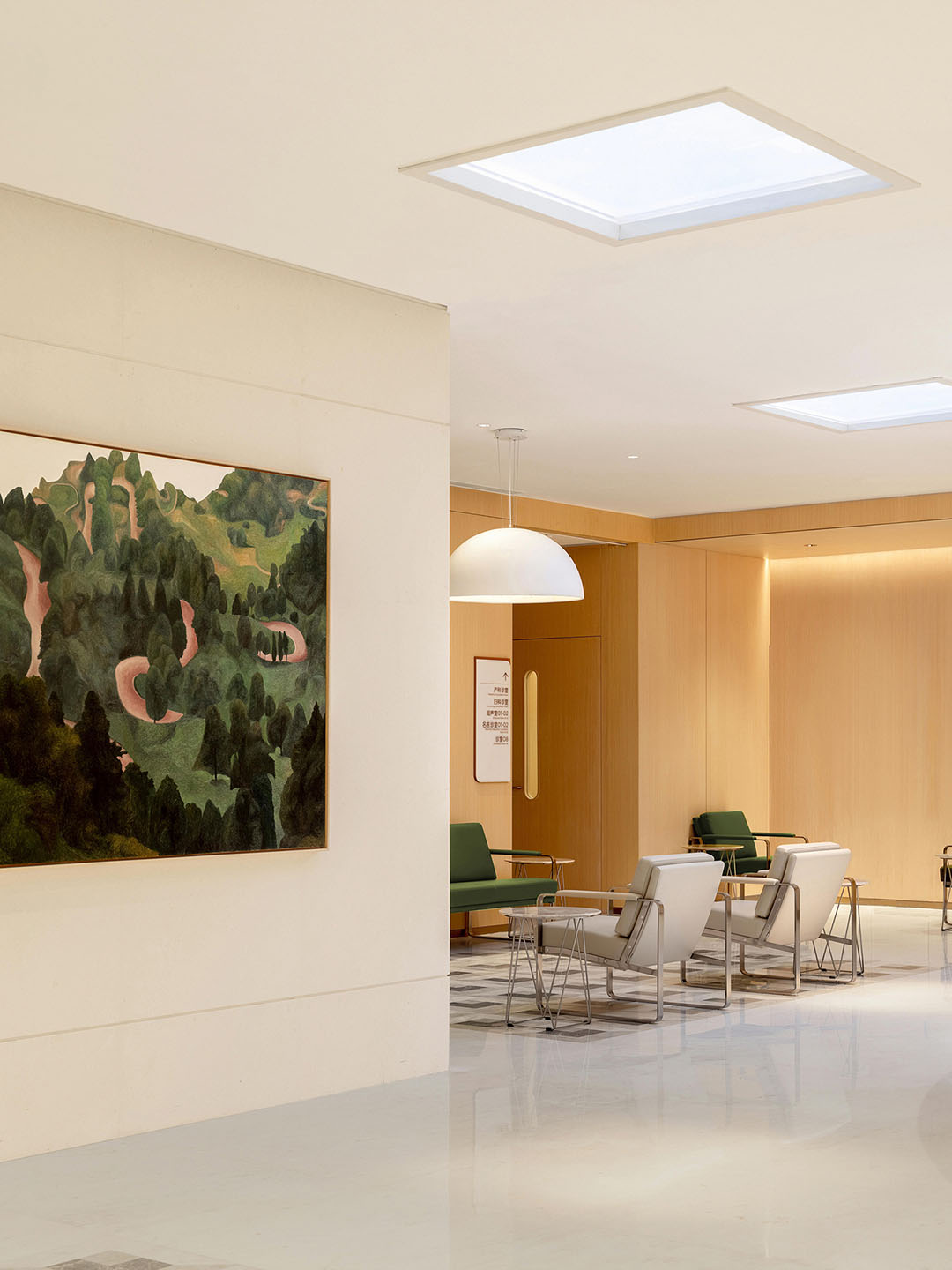
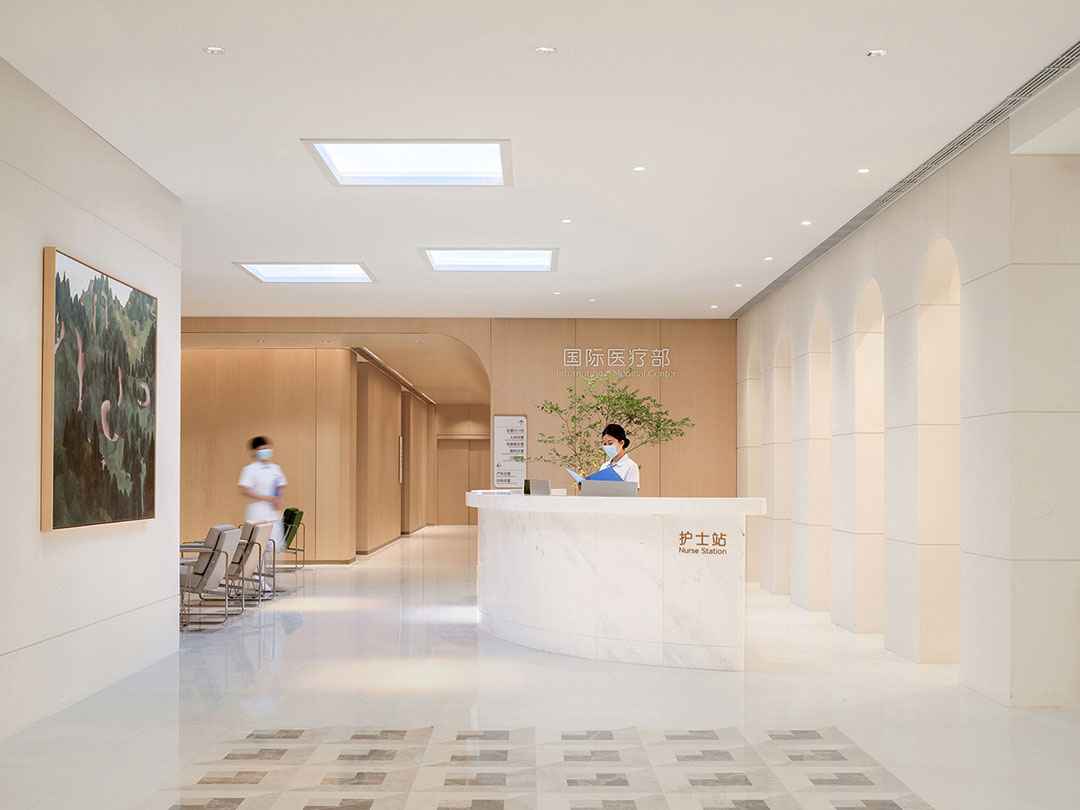
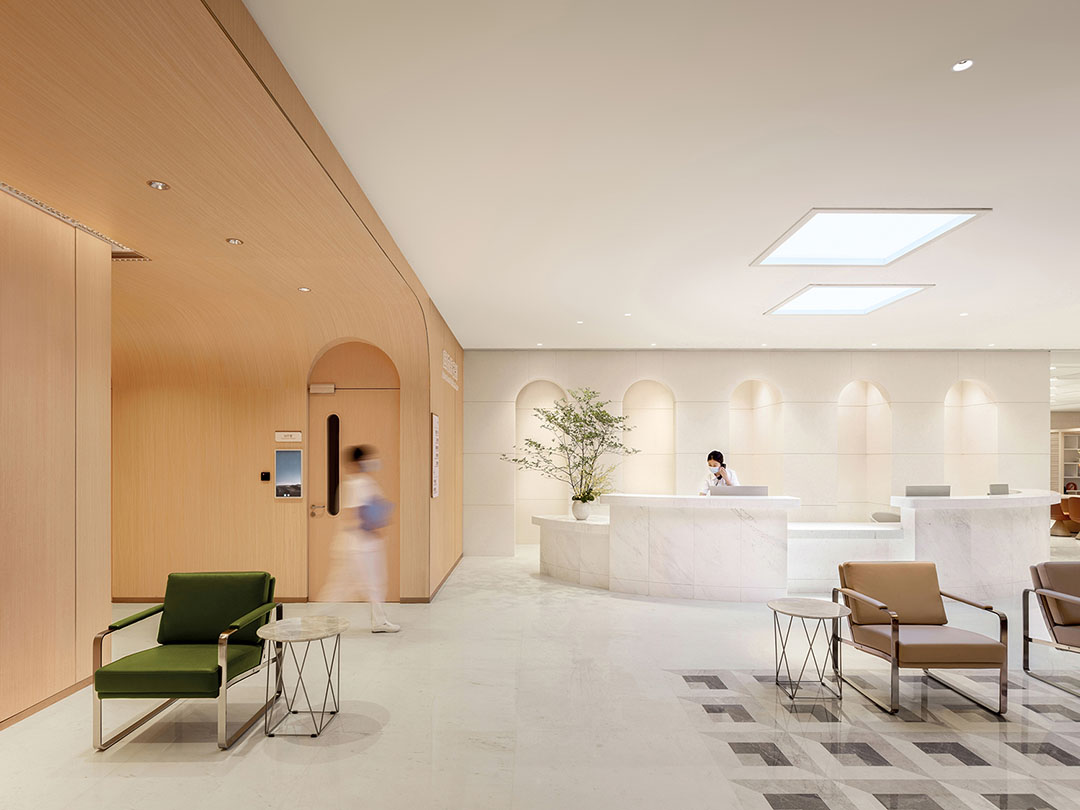
深圳前海泰康医院国际医疗部的整体空间设计是与泰康设计管理团队以及医疗团队的一次对艺术医院的疗愈空间的积极探索。
The overall spatial design of the Shenzhen Qianhai Taikang Hospital International Medical Department represents an active exploration of healing spaces within an art hospital, conducted in collaboration with Taikang's design management and medical teams.
护士站
2023年初,罗振华及团队以艺术疗愈为主题向泰康的集团高层与医疗团队汇报,深圳前海泰康医院国际医疗部有幸在一年半后成功落地。
Nurse Station
In early 2023, Luo Zhenhua and his team presented the concept of artistic healing to Taikang's senior management and medical team. Fortunately, the Shenzhen Qianhai Taikang Hospital International Medical Department successfully brought this vision to life a year and a half later.

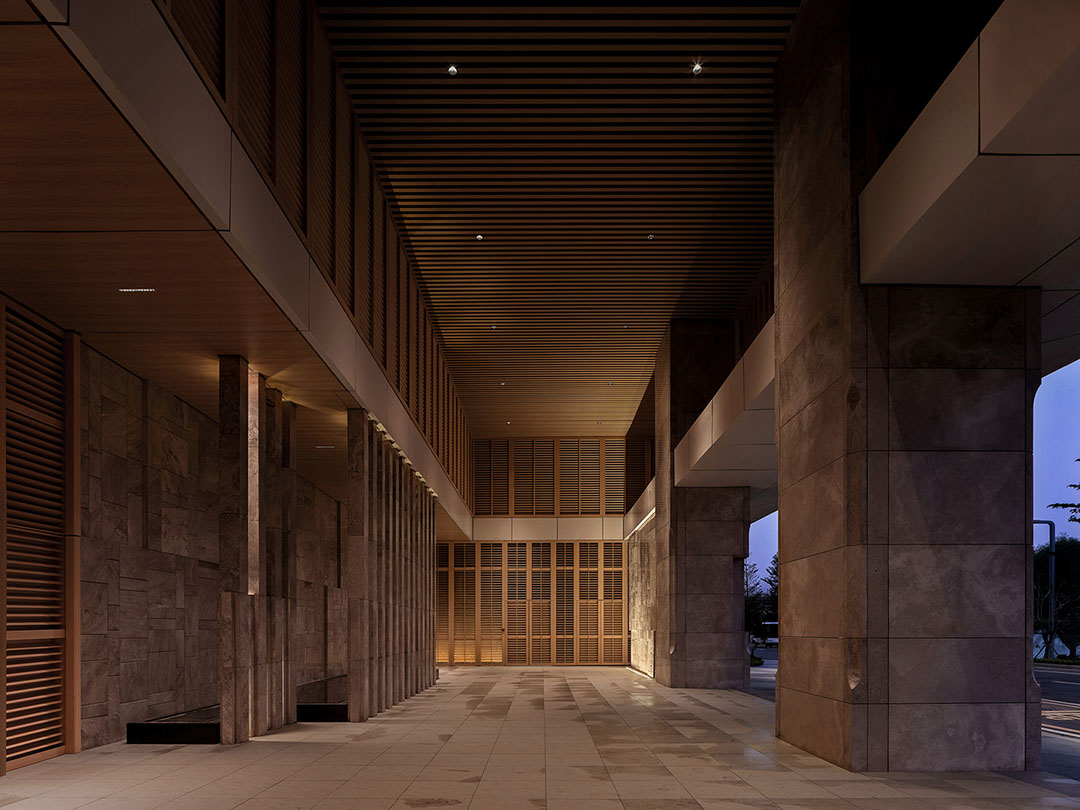
从高端医疗到艺术疗愈
From High-End Healthcare to Artistic Healing
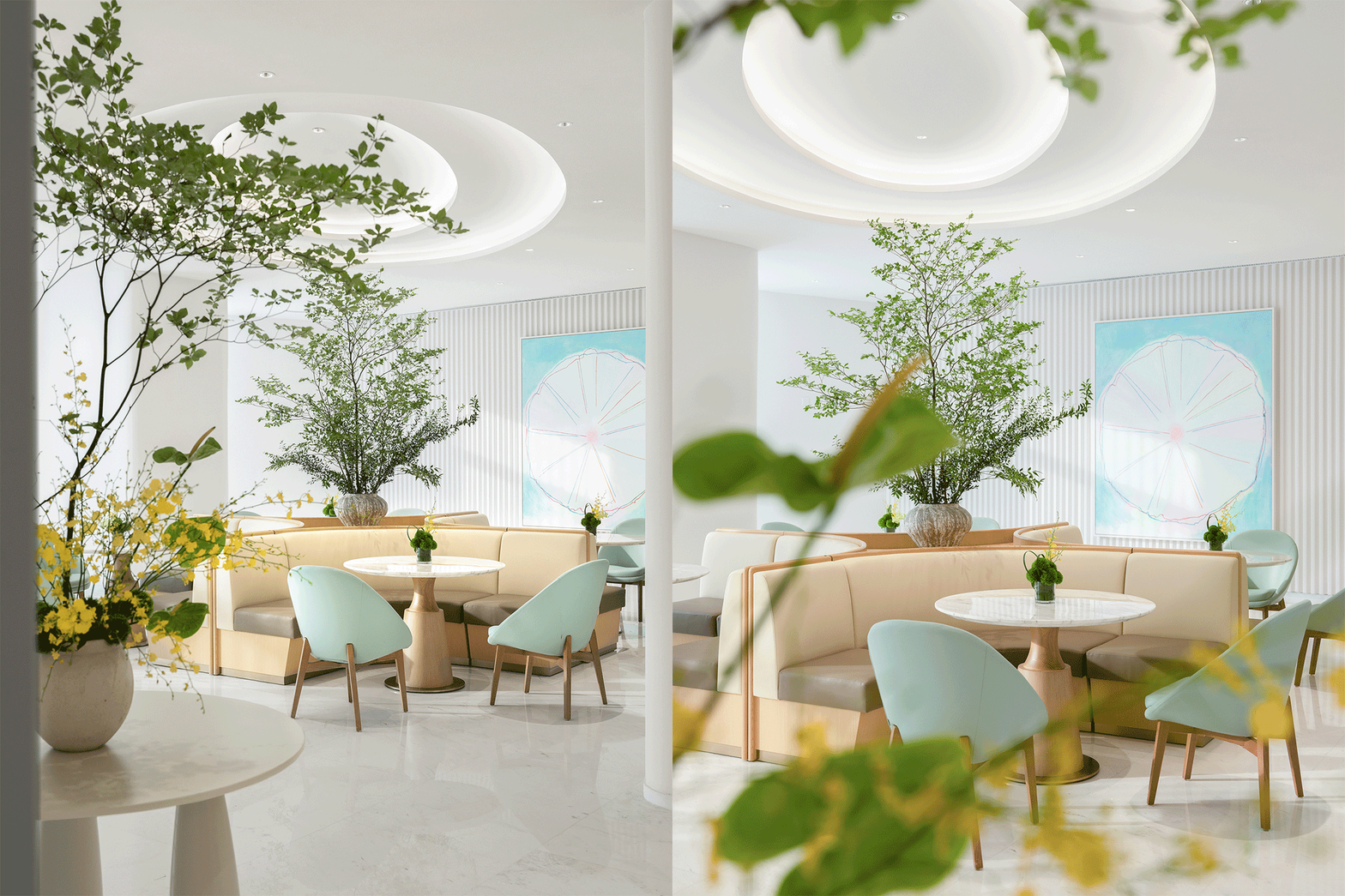

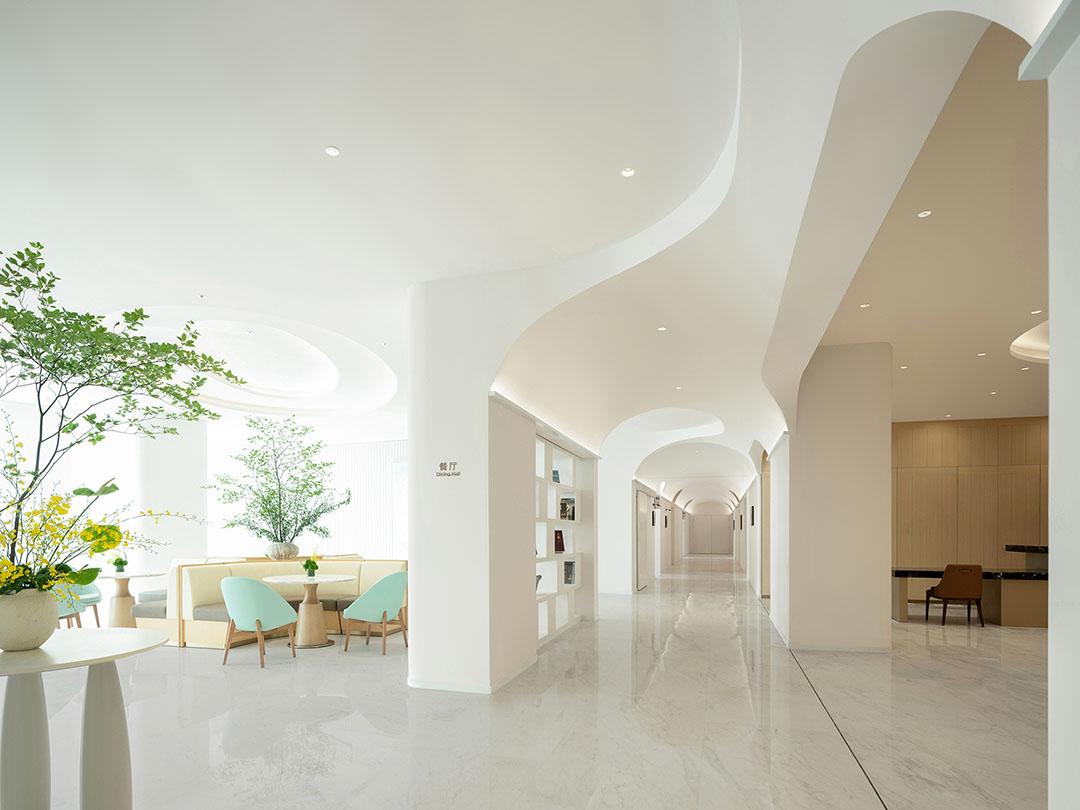
深圳前海泰康医院国际医疗部基于“艺术医院”的定位展开设计,探索适合当下的就医环境。长久以来,艺术是人们的一种交流方式,也是一种自我表达和治愈的方式。1940年代开始,艺术疗法甚至开始成为一种正式项目。
The design of the Shenzhen Qianhai Taikang Hospital International Medical Department is based on the concept of an "art hospital," exploring a contemporary approach to medical environments. For a long time, art has been a means of communication, self-expression, and healing. Since the 1940s, art therapy has even become a formal program.
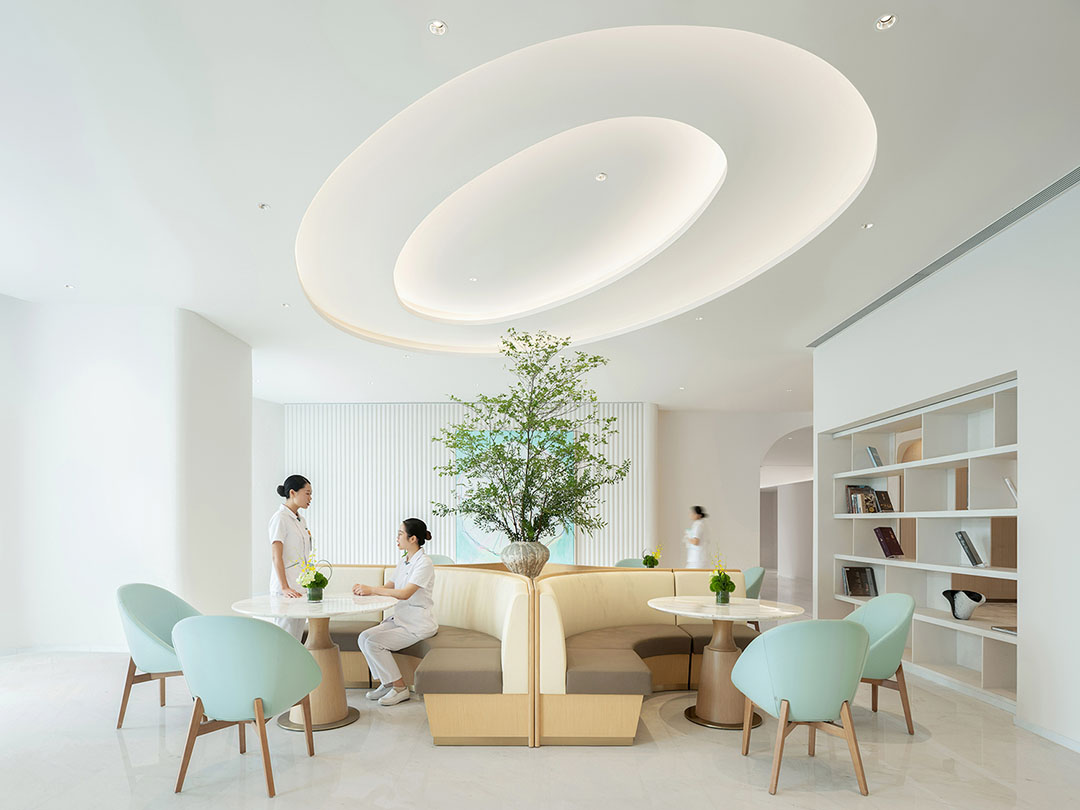
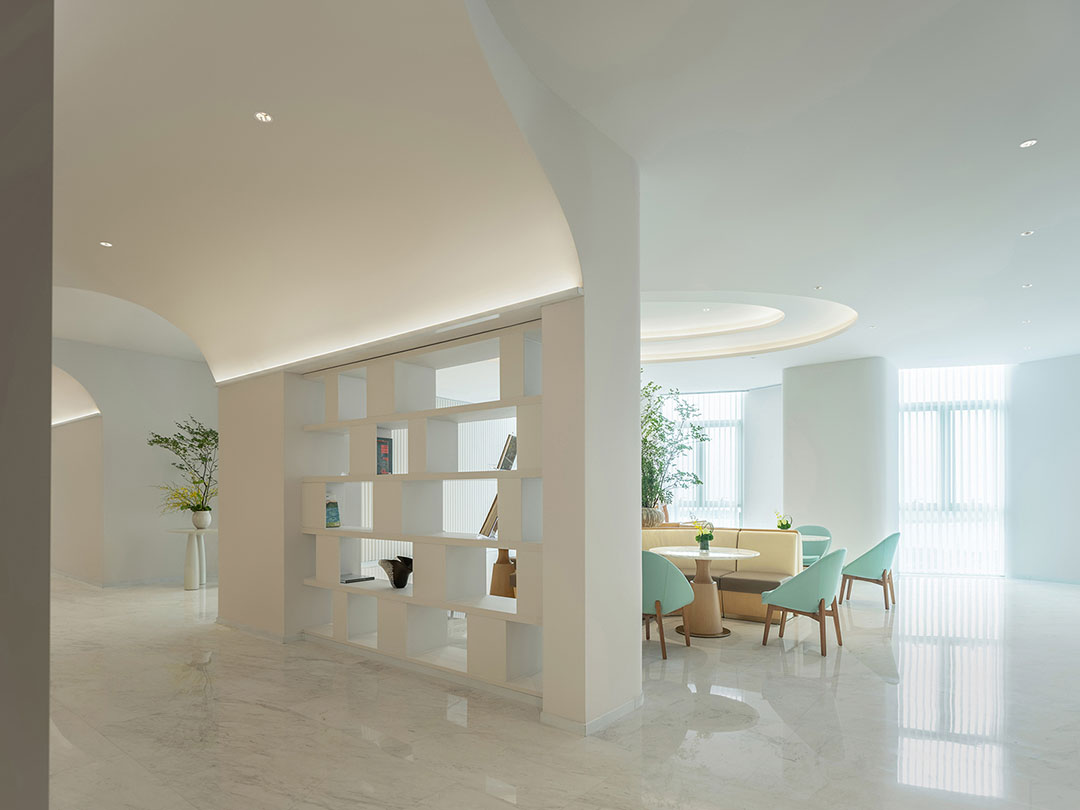
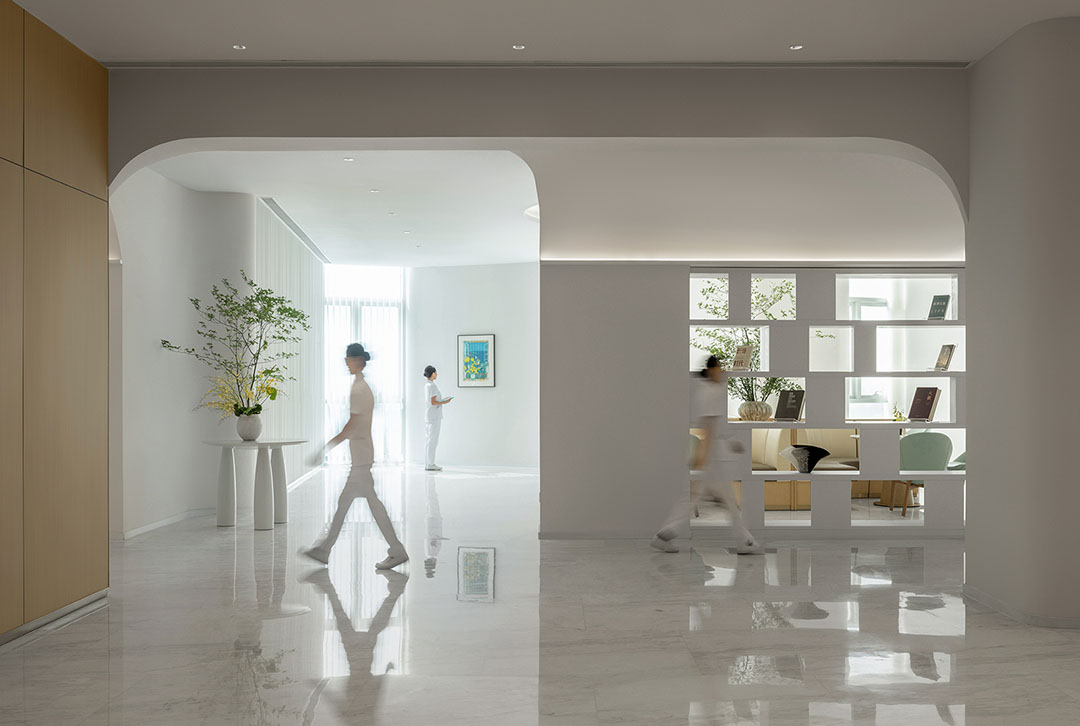
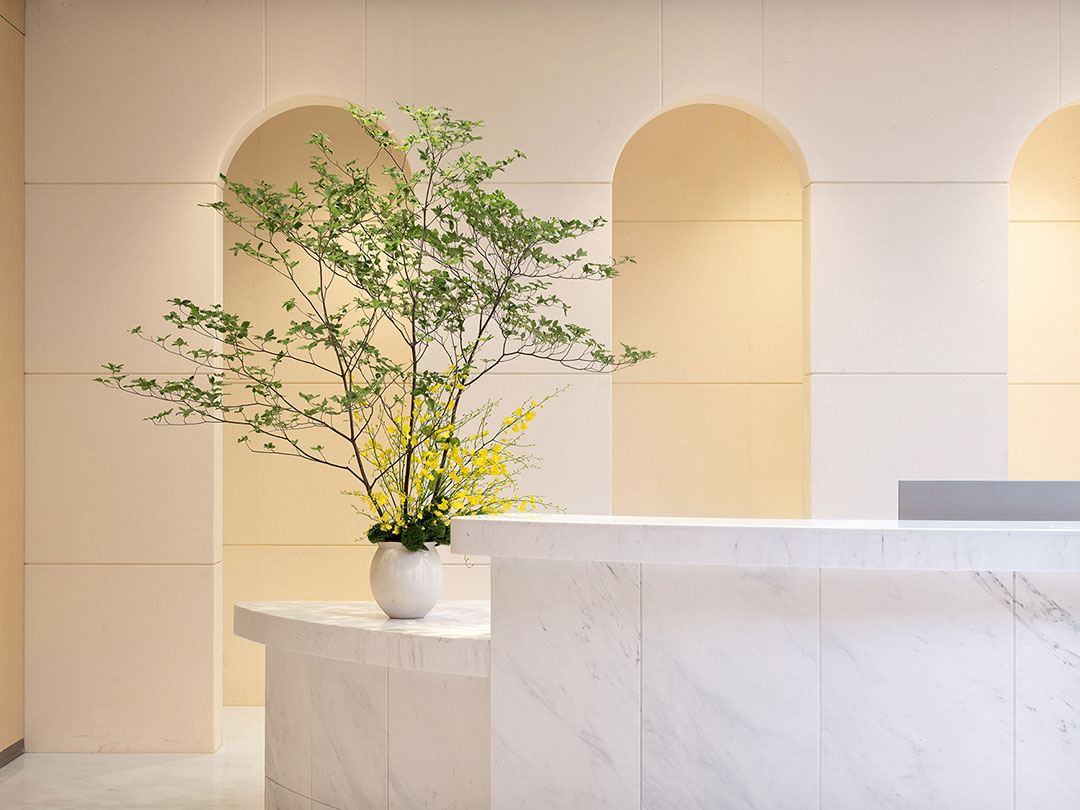
本设计尝试使用架上绘画、摄影、陶艺、花艺、雕塑甚至3D打印工艺品和音乐与空间设计做结合,以此展开多形式的艺术组合,试图从空间上呼应“艺术医院“主题与功能。
技术时代,人们习惯了直接、即时、简单的观看方式,但医疗空间鼓励的是另一种交互方式:近距离的、指导性的、伴随式的交互。
This design attempts to integrate easel painting, photography, ceramics, floral art, sculpture, and even 3D-printed crafts and music with spatial design, creating a perse artistic combination that resonates with the theme and function of an "art hospital." In the technological age, people are accustomed to direct, immediate, and simple ways of viewing, but medical spaces encourage a different type of interaction: close, guided, and accompanied.
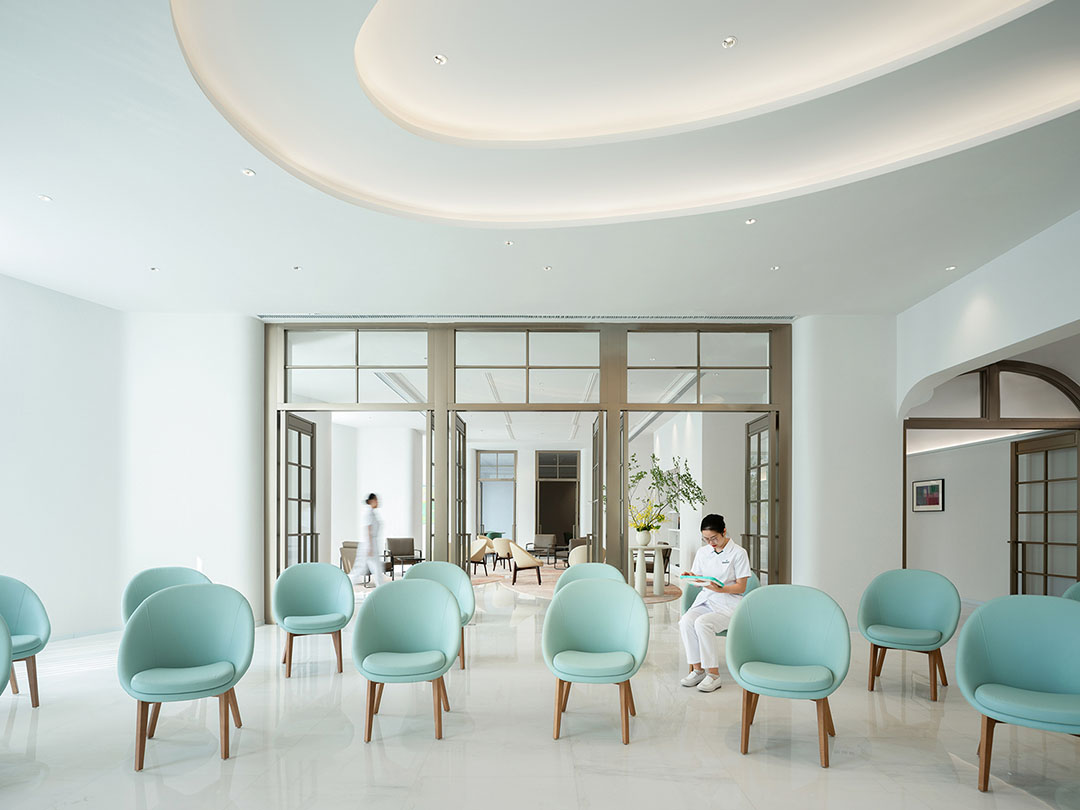
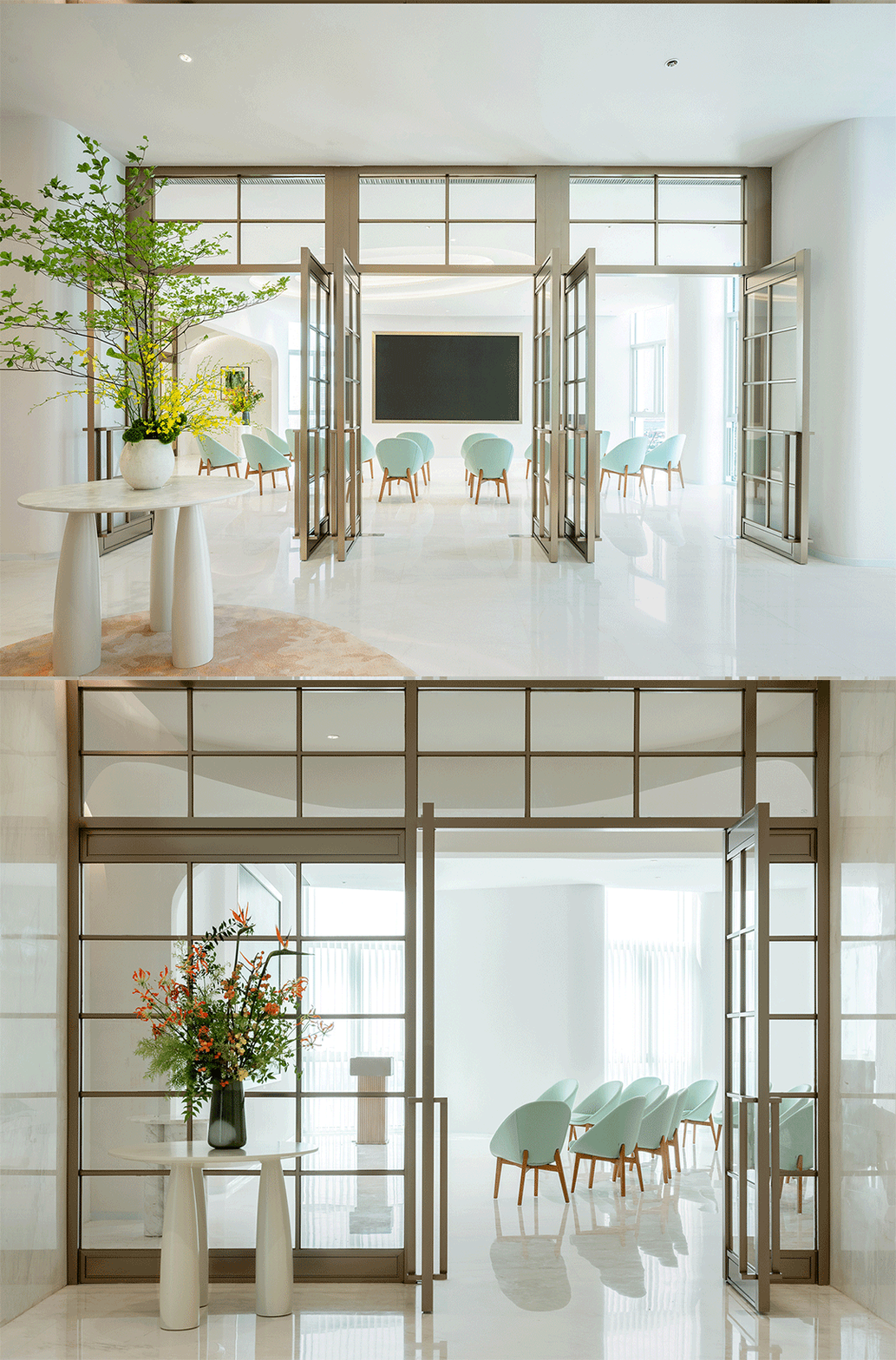
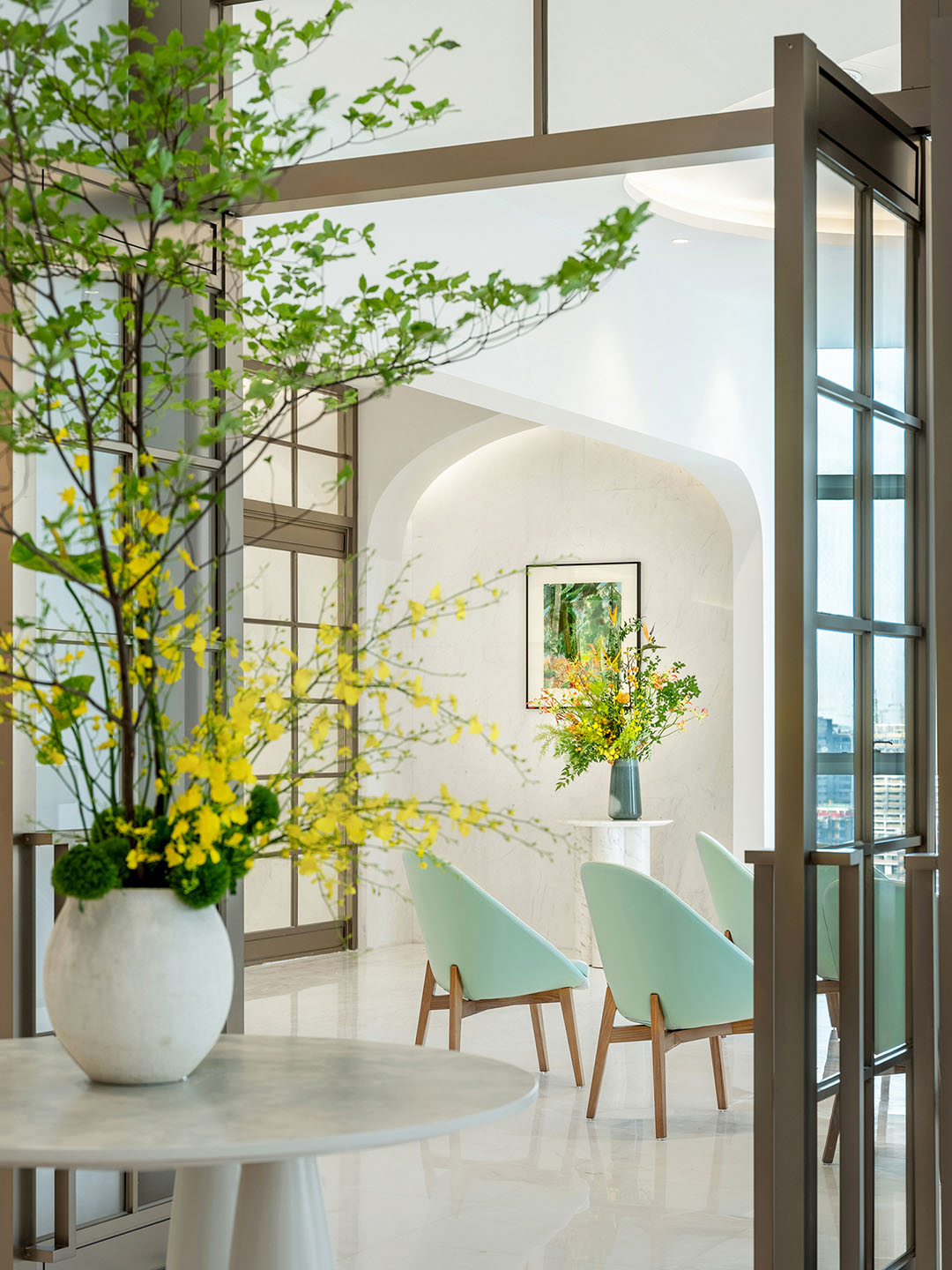
艺术疗法可用于治疗多种疾病以及各种心理问题:与年龄相关的疾病、癌症、焦虑、抑郁症、饮食失调、创伤后应激障碍等。与艺术交互的延伸是与情绪、身体和世界的交互。疗愈往往在这个过程中自然发生。
Art therapy can be used to treat various diseases and psychological issues: age-related illnesses, cancer, anxiety, depression, eating disorders, post-traumatic stress disorder, etc. The extension of interacting with art is interacting with emotions, the body, and the world. Healing often occurs naturally in this process.
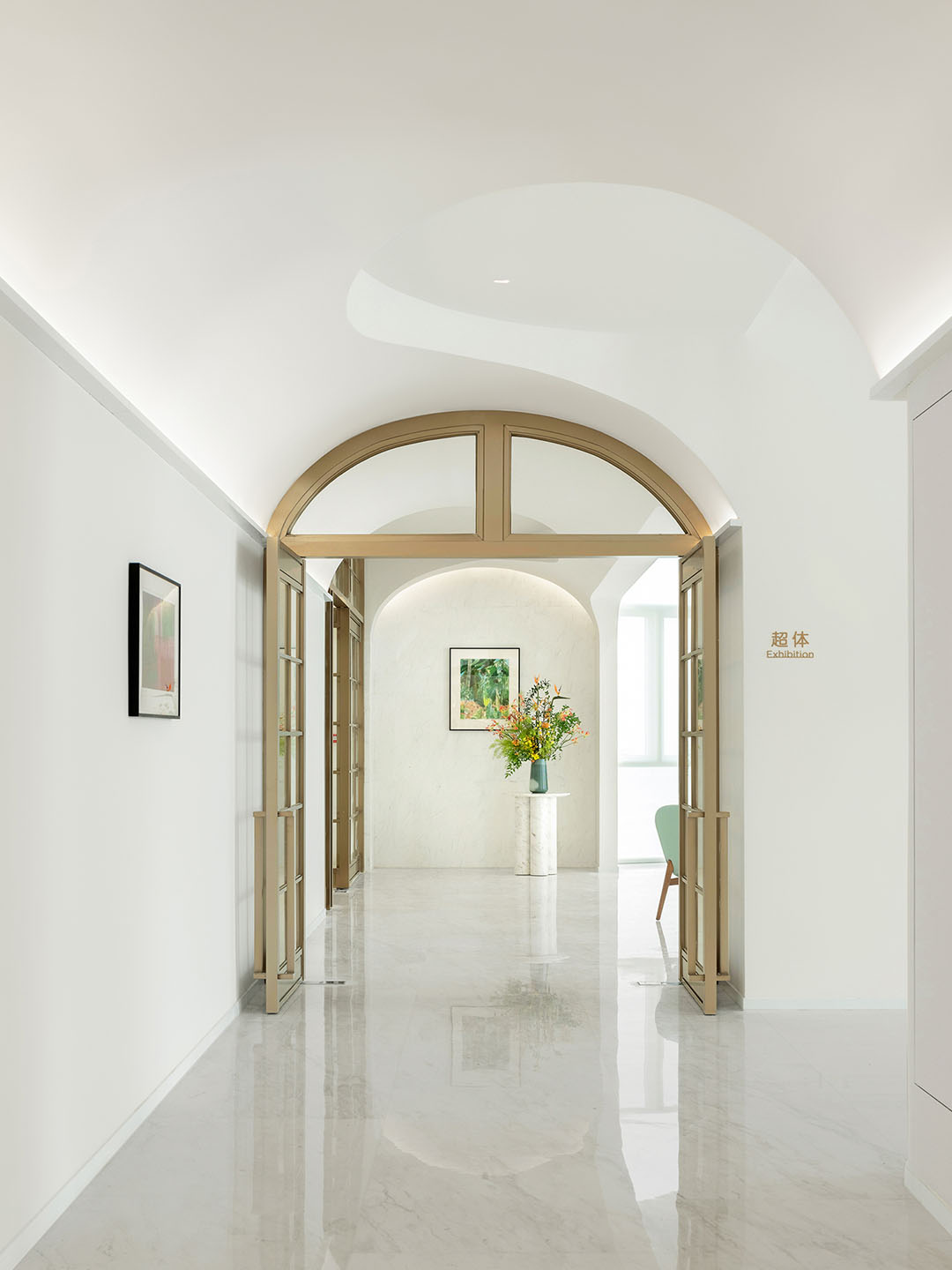
为不同的患者提供更好的舒适性和丰富的生活加治疗的空间,创造更积极的住院体验:比如住院期间的会客或多种场景的休息疗愈,更关注家庭为单位的体检,国际医疗部与全院资源的高效流线,先进的远程诊疗等等。
Providing better comfort and a rich living and treatment space for different patients creates a more positive hospitalization experience: for example, receiving visitors or resting and healing in various scenarios during hospitalization, focusing more on family-unit health check-ups, efficient flow lines between the international medical department and hospital resources, and advanced remote diagnosis and treatment.
保护隐私的高端医疗空间
High-End Medical Spaces that Protect Privacy
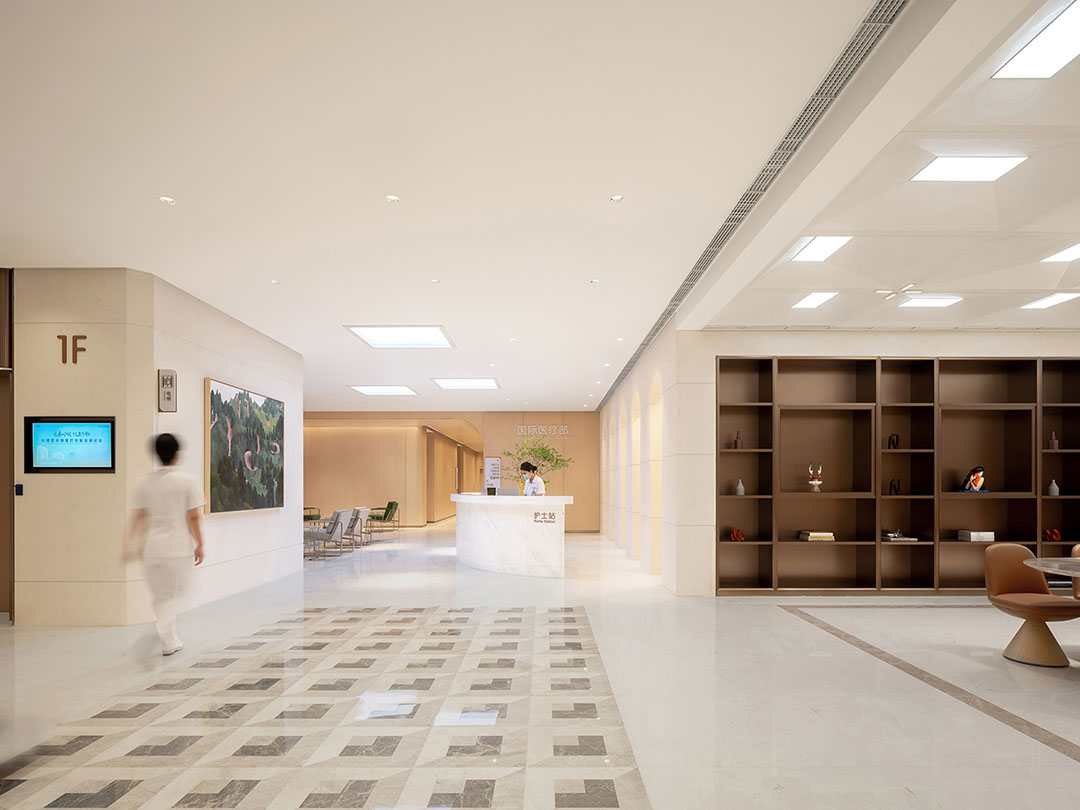
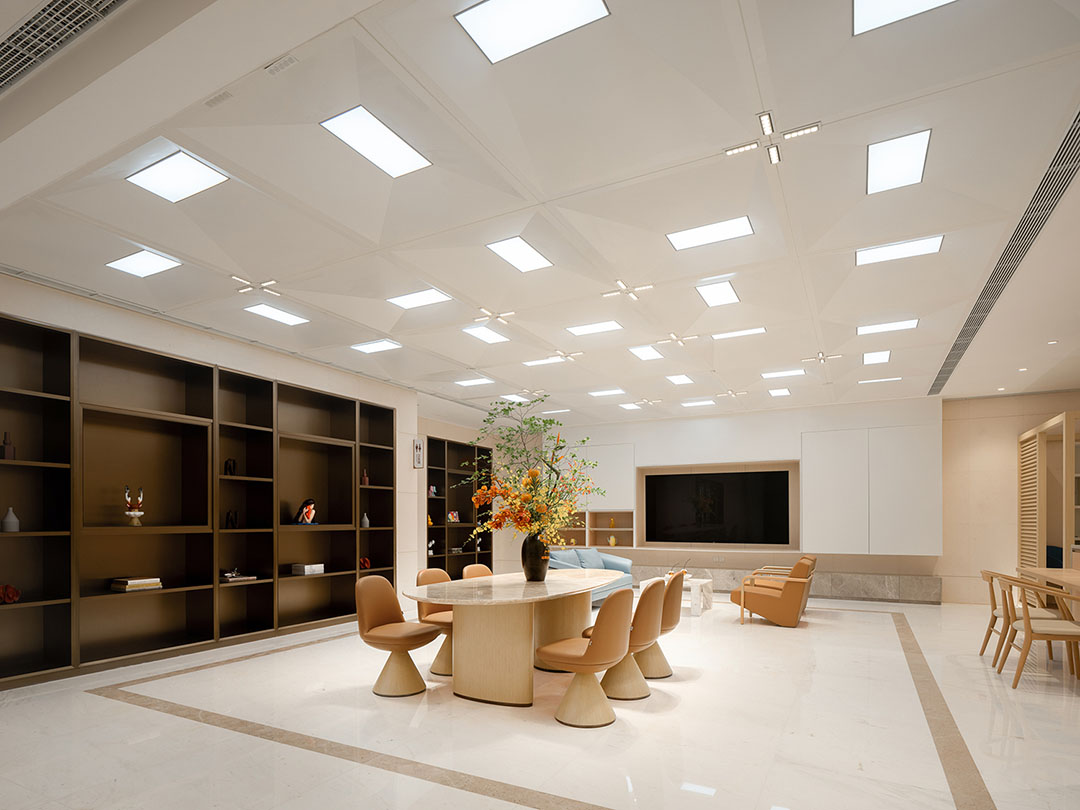
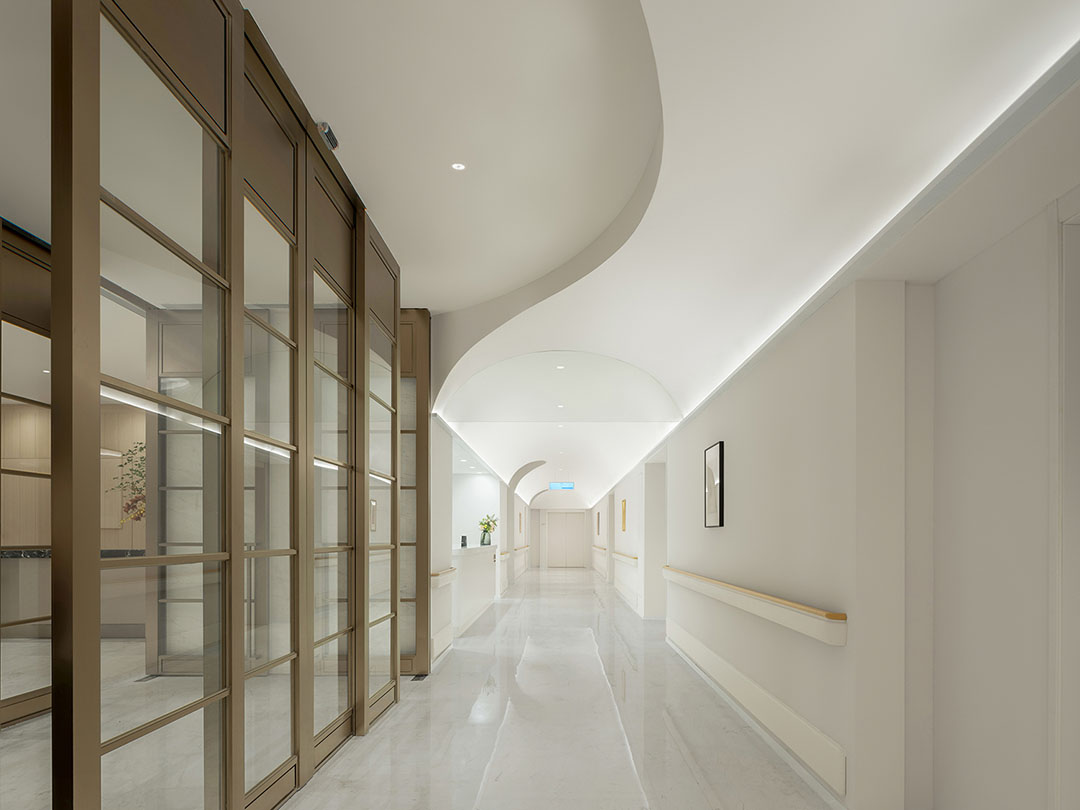
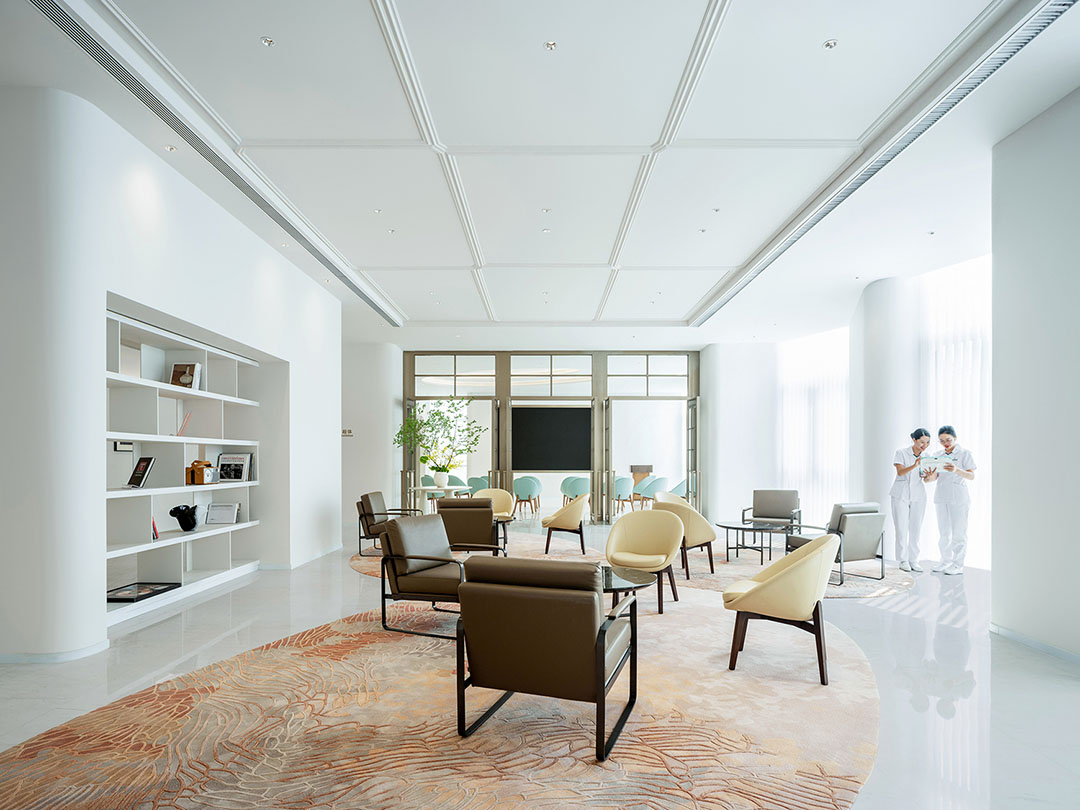
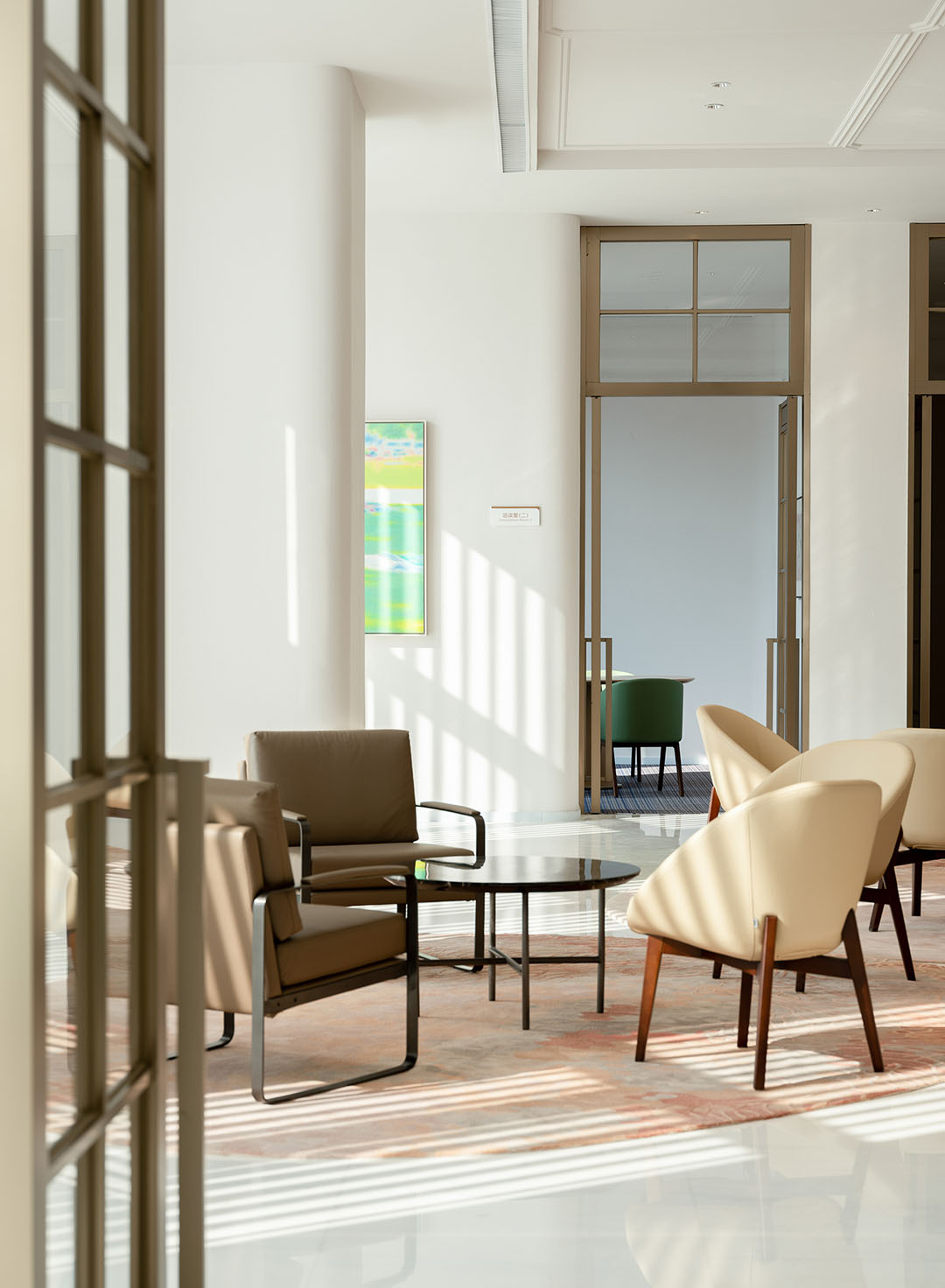
对于医疗空间而言,也许“共享、弹性、透明”等空间策略都行不通,相反“分科、隔离、保护、密封”等等成了不容驳斥的关键词。但在深圳前海泰康医院国际医疗部柔和的公共空间设计找到了折中的方式。
For medical spaces, perhaps spatial strategies such as "sharing, flexibility, transparency" do not work. Instead, "pision, isolation, protection, sealing" have become indisputable keywords. However, the Shenzhen Qianhai Taikang Hospital International Medical Department's soft public space design finds a compromise.
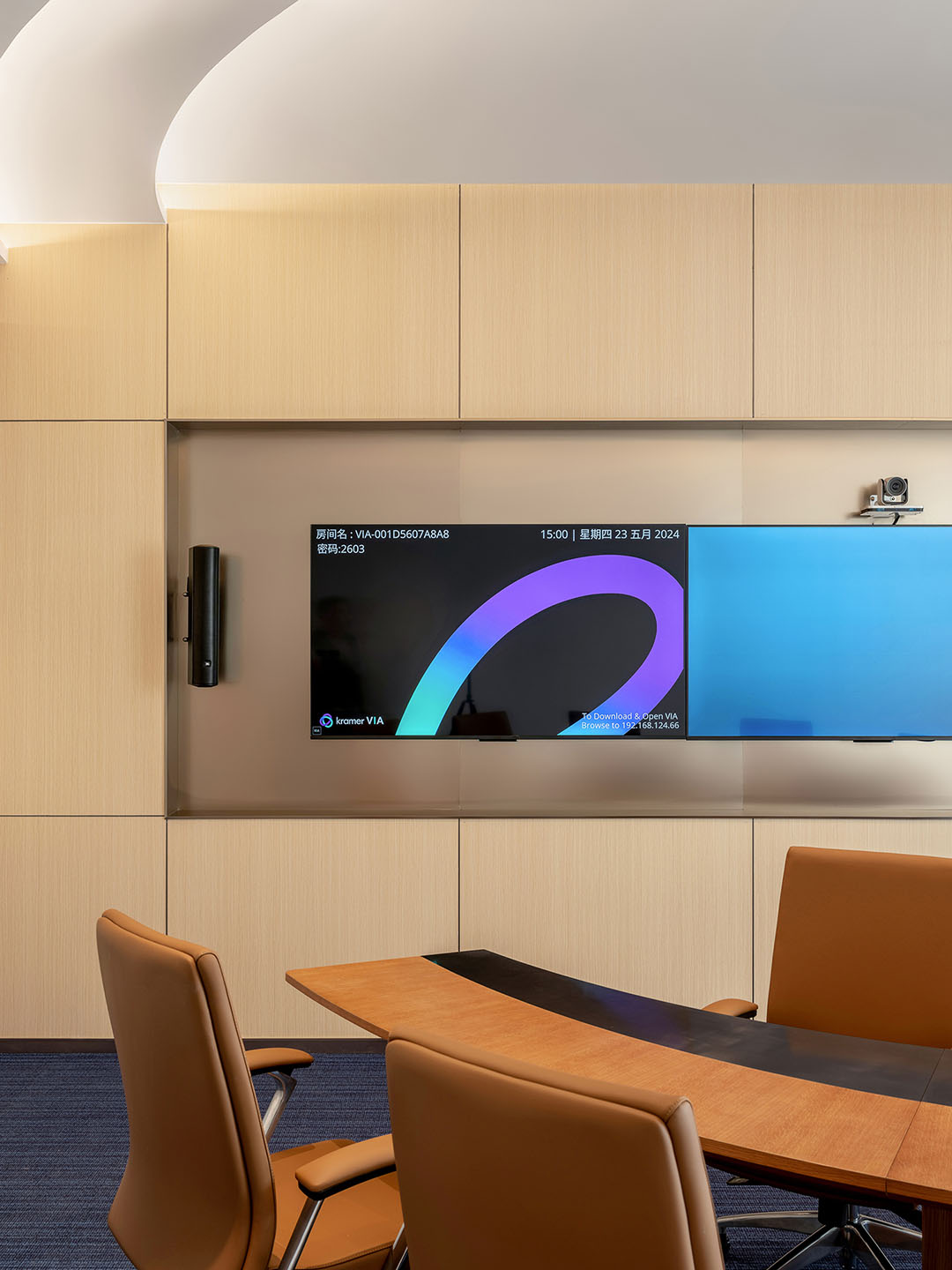
与纯粹的隔离不同,注重隐私是满足患者舒适度和满意度的重要任务,创建私密且舒适的医疗空间可以显著提升患者的整体体验并改善临床结果,但同时要确保患者不会产生被孤立、甚至被抛弃的孤独感。
Unlike pure isolation, focusing on privacy is an important task to meet patient comfort and satisfaction. Creating private and comfortable medical spaces can significantly enhance the overall patient experience and improve clinical outcomes, while ensuring that patients do not feel isolated or even abandoned.
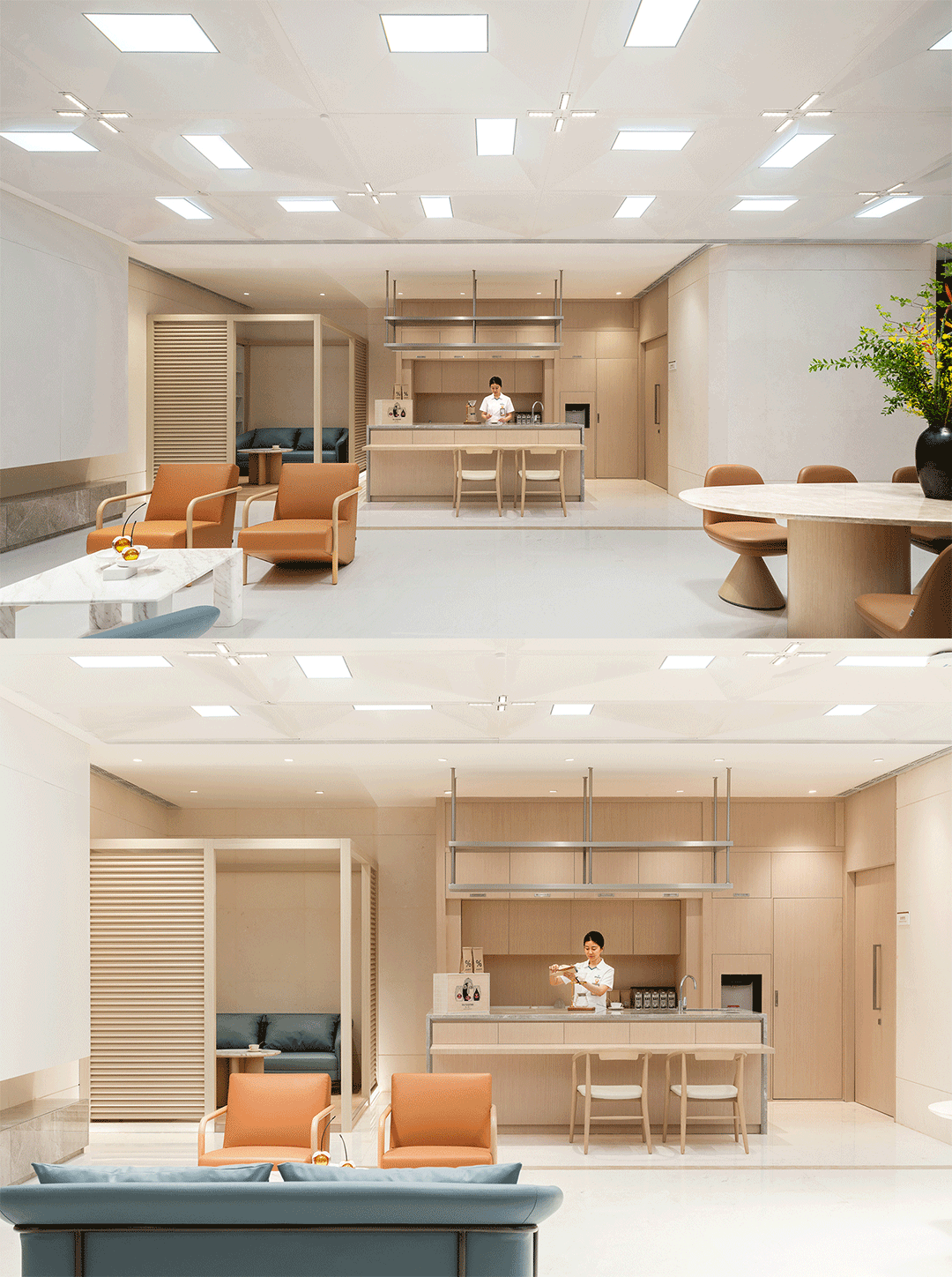
在独立的国际医疗部主入口,由外而内的空间组织有影壁和一系列空间暗示,让患者与客人感受到私密与尊贵;楼层内诊疗、交流、就餐与休息空间皆以书架、屏风、花艺等手法做软分隔,结合动线处理,既保证空间联通、使用高效又做到适度私密。
At the independent main entrance of the international medical department, the spatial organization from outside to inside includes a screen wall and a series of spatial hints, allowing patients and guests to feel privacy and prestige; within the floors, diagnosis, communication, dining, and rest spaces are softly separated by bookshelves, screens, and floral art, combined with flow line processing, ensuring spatial connectivity, efficient use, and appropriate privacy.
与长寿时代相关的设计
Design Related to the Era of Longevity
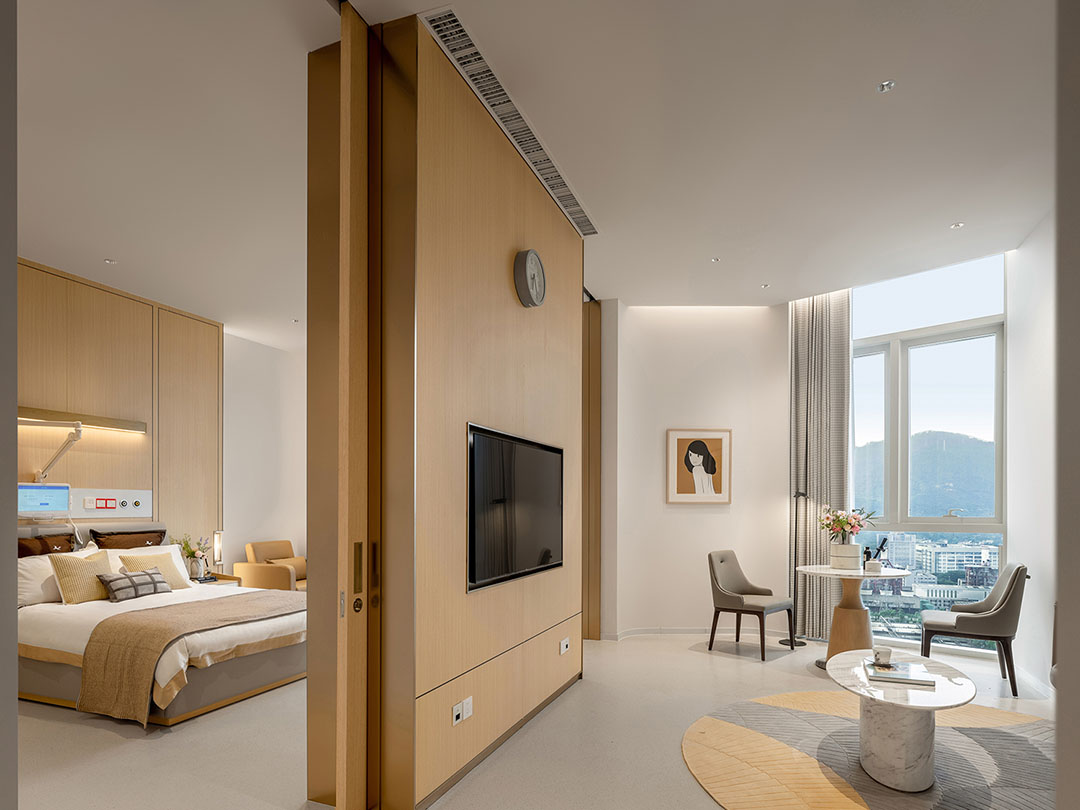

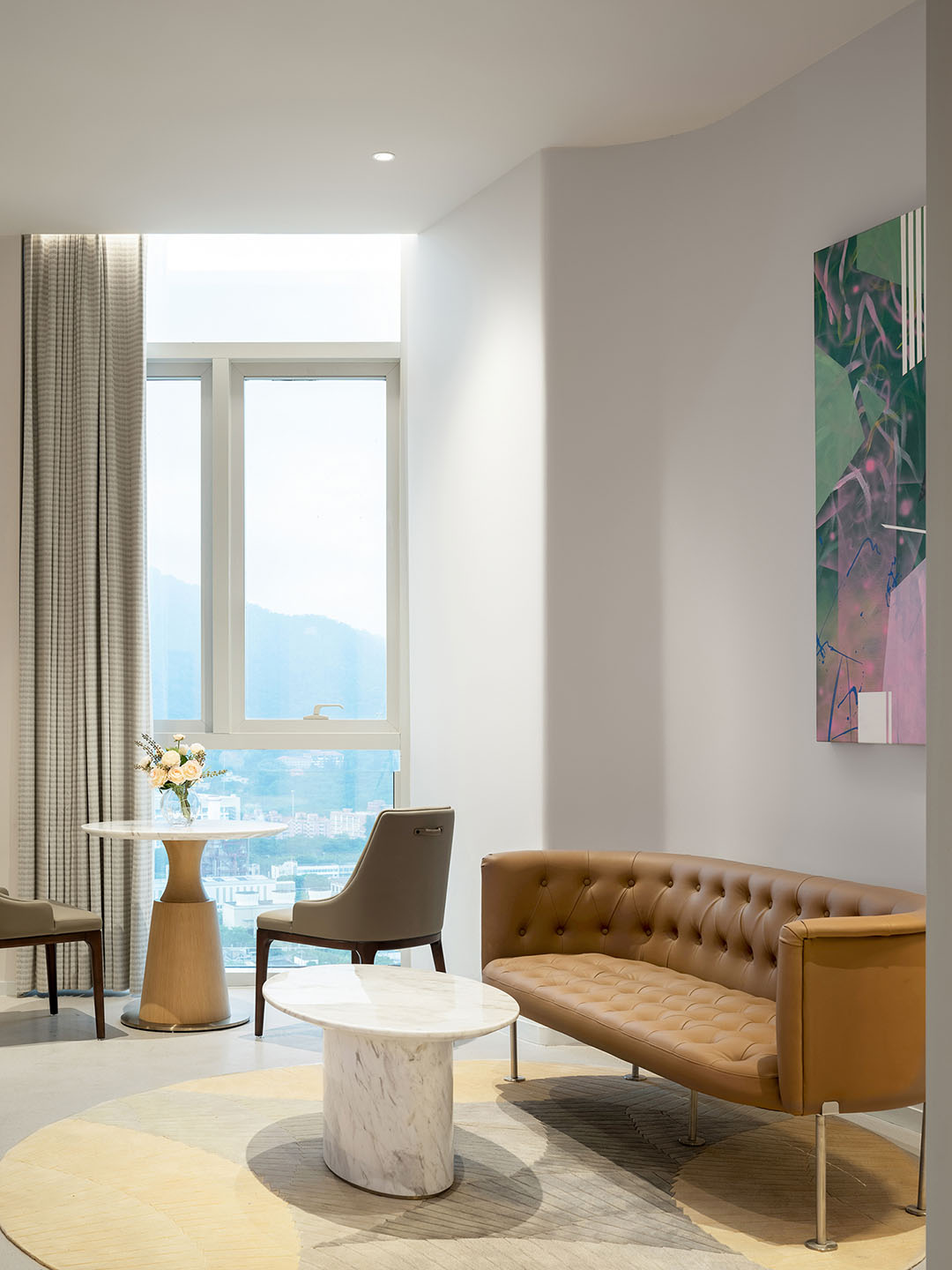
在一个全生命周期里,老年是一个必然的过程,而长寿时代意味着这一过程的延长——从健壮到衰弱、失能最终离世的过程的拉长。在这个充满丧失和衰退的过程中,如何最大限度地获得幸福和尊严,是医疗空间越来越需要重视的议题。
In a full life cycle, old age is an inevitable process, and the era of longevity means the extension of this process—the lengthening of the process from robustness to weakness, disability, and ultimately death. In this process full of loss and decline, how to maximize happiness and dignity is an issue that medical spaces increasingly need to pay attention to.
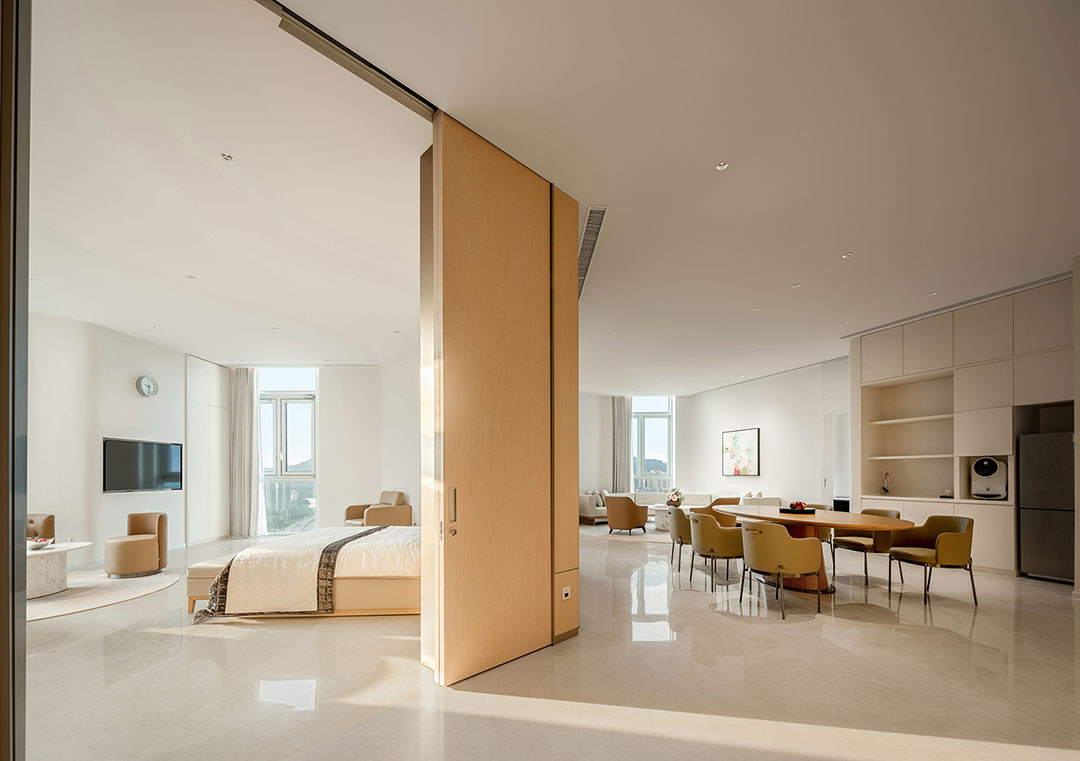
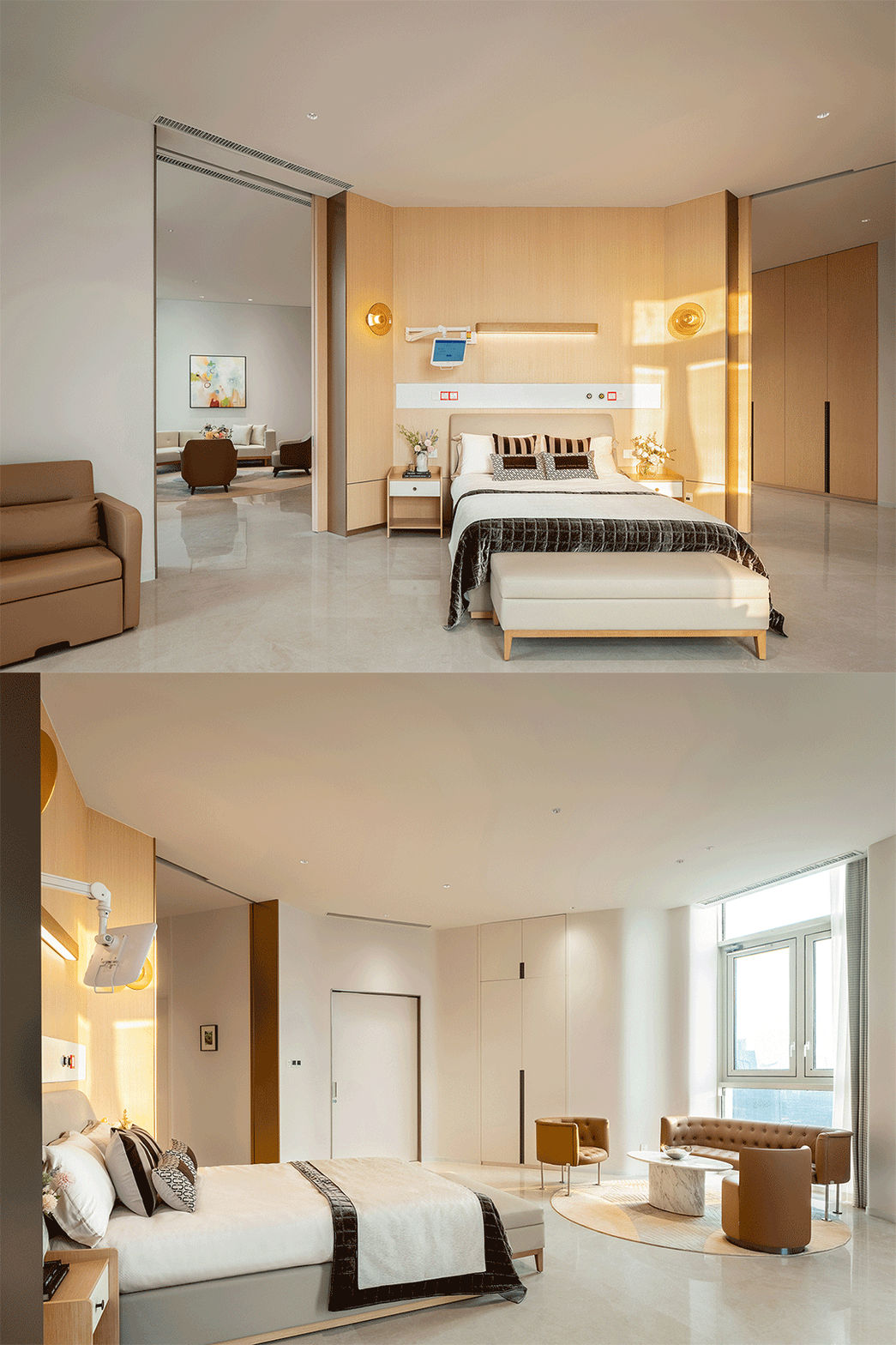
除了先进的医疗设备与技术的运用,多学科协调、最大化的为老年人提供个性化服务以及有针对性的舒适的就医环境:满足这个群体对全方面健康管理和疾病预防与治疗的需求。
In addition to the use of advanced medical equipment and technology, multidisciplinary coordination, maximizing personalized services for the elderly, and targeted comfortable medical environments: meeting the needs of this group for comprehensive health management and disease prevention and treatment.
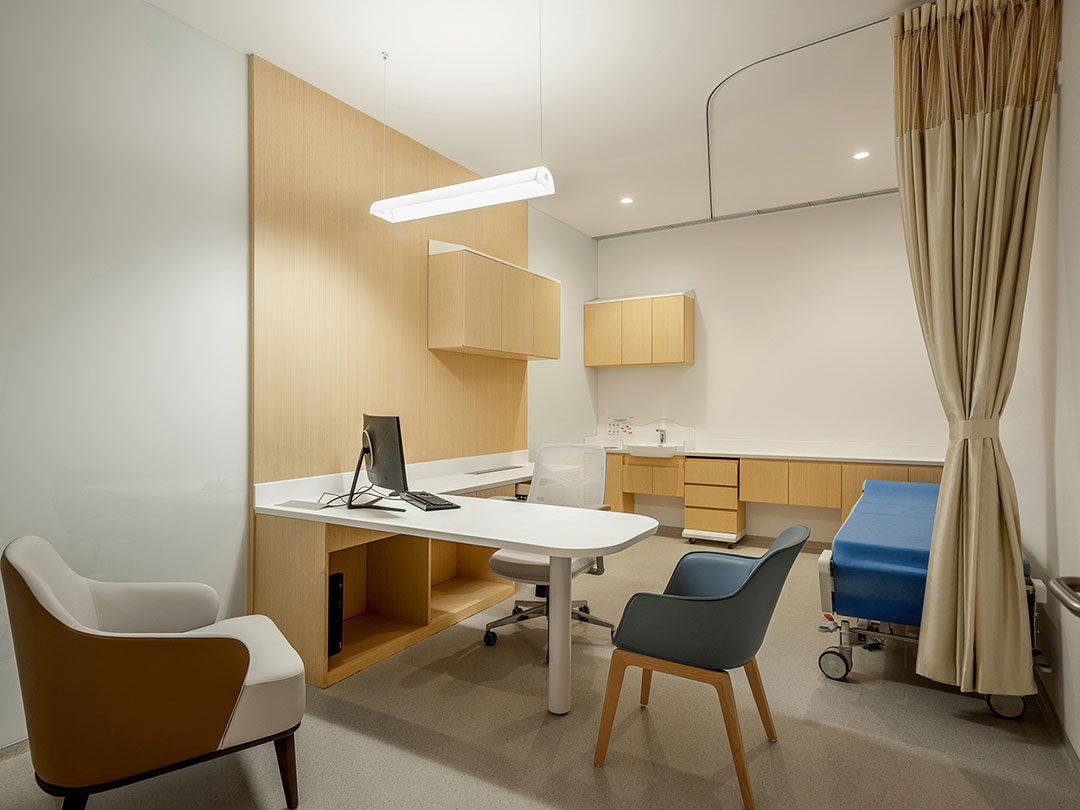
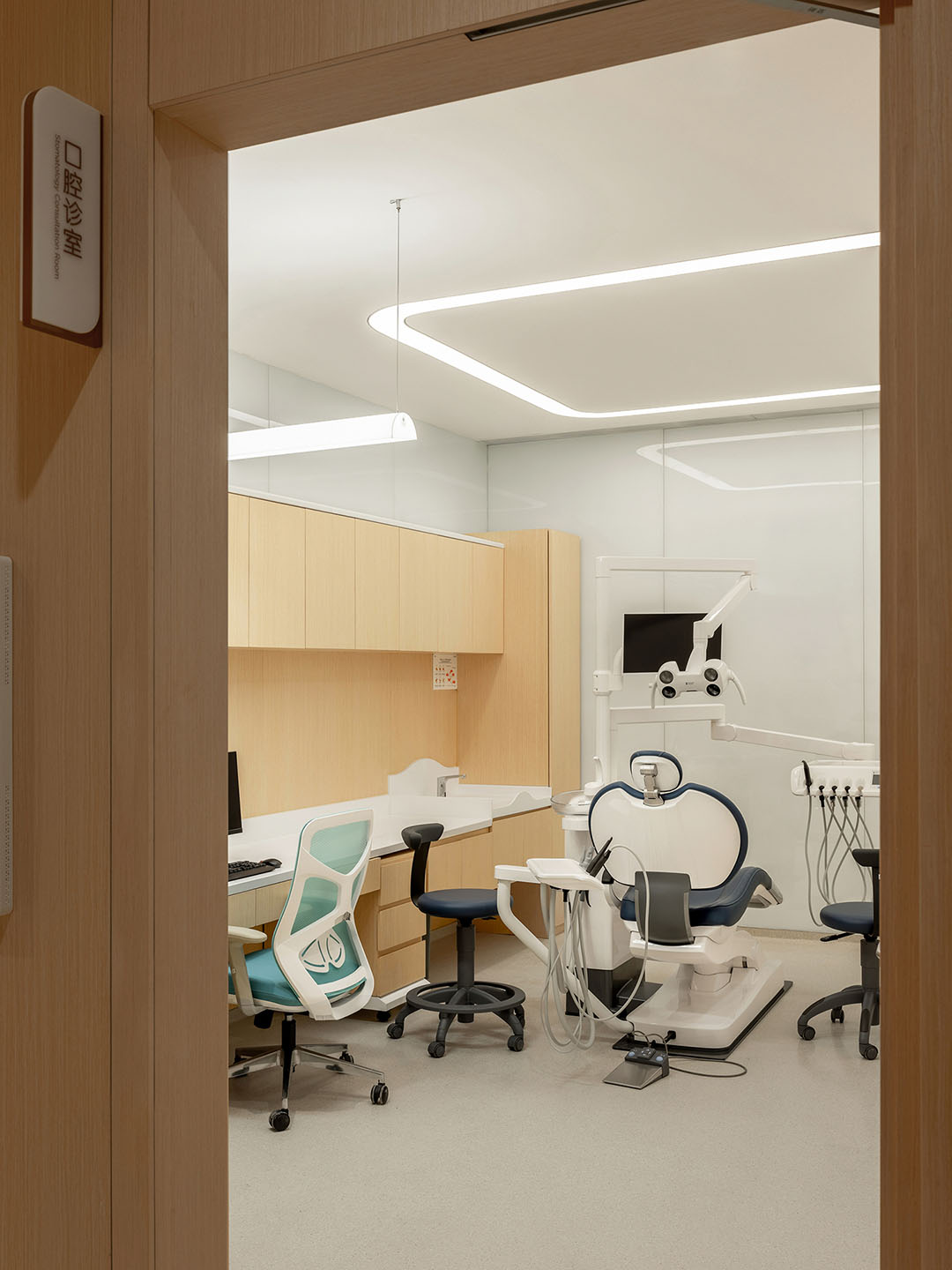
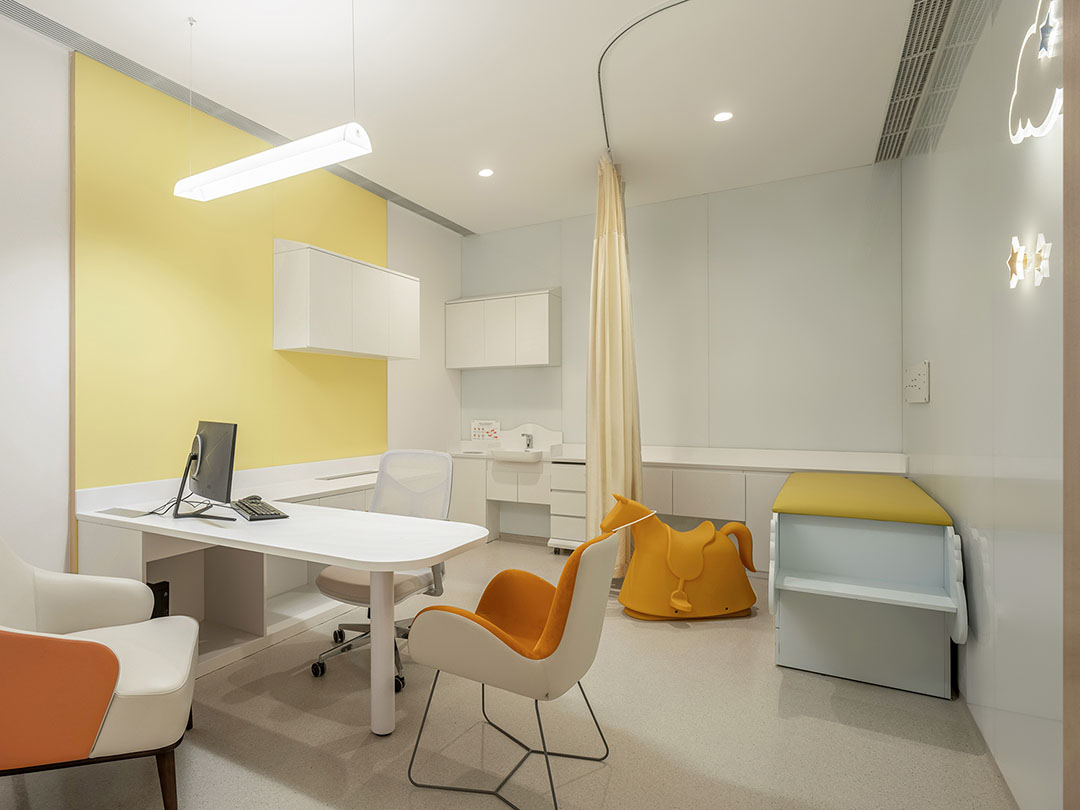
与此同时,结合艺术还可以提高老年人的自尊并积极应对慢性病。
对于现代医疗空间设计而言,所谓的“日趋专业”随即带来的就是程式化的工作,所谓“经验“的重复很容易导致设计的僵化。方夏设计希望通过多年累积的有关”衣食住行医教艺…“等等的深入研究与实践,去设计出既“专业”又“有深度和温度“的空间,最终增加幸福指数。
At the same time, combining art can also improve the self-esteem of the elderly and actively cope with chronic diseases.
For modern medical space design, the so-called "increasing professionalism" immediately brings about stylized work, and the repetition of so-called "experience" can easily lead to rigid design. Fangxia Design hopes to use years of accumulated in-depth research and practice on "clothing, food, housing, transportation, medical care, education, art..." to design spaces that are both "professional" and "deep and warm," ultimately increasing the happiness index.
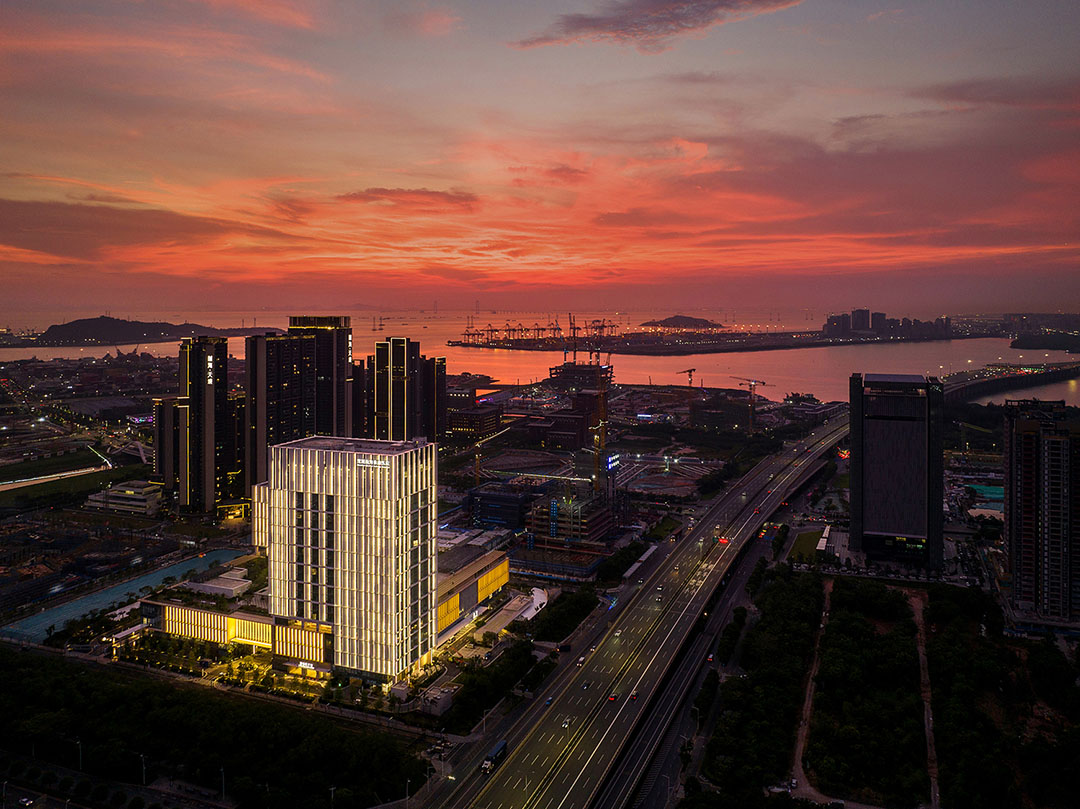
项目信息
项目名称:深圳前海泰康医院国际医疗部
设计内容:主入口建筑外立面方案、室内设计、软装设计
项目地址:中国,深圳前海
项目客户:泰康保险集团
设计时间:2023-2024
竣工时间:2024
设计面积:5000㎡
项目摄影:图派摄影
设计团队:罗振华 牛倩璇 张艳丽 周周 赵公普 徐曾 田昌鑫 李宇轩 陈文懿
文案策划:NARJEELING那几岭
项目策划:楽品牌策略机构
来源:本文由方夏设计提供稿件,所有著作权归属方夏设计所有。
本文版权归腿腿教学网及原创作者所有,未经授权,谢绝转载。

上一篇:政策新闻 | 黄山市住建局:工程档案验收提质增效 助力优化营商环境
下一篇:建筑赏析|厄瓜多尔山林间的“隐形精灵屋”是九根立柱撑起的自然梦幻之居
猜你喜欢
BIM建筑|抢先看:2025,全球将落成开放的42座精彩建筑
BIM建筑|独栋住宅新物种:成都麓湖黑石岛垂直五连墅 / 孟凡浩x万华
BIM建筑|萨夫迪“栖息地”新作:秦皇岛海碧台住宅二期
BIM建筑|2025更新版!一份全球154座城市的建筑地图汇总送给你
BIM建筑|2024,让我们印象深刻的摄影
建筑赏析|绘画与建筑:空间视角下の日本艺术
最新课程



推荐专题























客户端下载 Windows 10 / 11 64 位测试版